
Education
Top Health Colleges in the Persian Gulf

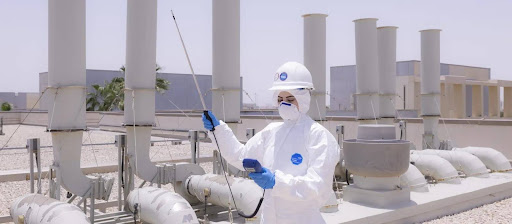
The Persian Gulf region is investing heavily and strategically in healthcare infrastructure, advanced medical technologies, comprehensive primary care systems, and population health initiatives—driving unprecedented sustained demand for high-quality health education preparing skilled professionals across diverse healthcare specialties. Gulf Cooperation Council countries pursue ambitious health objectives outlined in national strategies including Saudi Vision 2030, Qatar National Health Strategy, UAE Vision 2021, Bahrain Economic Vision 2030, and Oman Vision 2040—all prioritizing healthcare quality improvement, healthcare workforce development, universal health coverage expansion, and population health outcome enhancement.
This massive healthcare transformation creates critical workforce shortages across nursing, allied health sciences, public health, healthcare administration, and emerging health technology domains requiring systematic expansion of health education capacity and quality. From nursing and respiratory therapy to public health and wellness promotion, understanding which institutions deliver genuinely hands-on, properly accredited, and employment-focused training for tomorrow’s healthcare professionals helps students invest strategically in credentials preparing them for meaningful careers supporting the Gulf’s expanding healthcare systems and improving regional population health outcomes.
What Defines Top Health Colleges in the Gulf
The top health colleges across the Persian Gulf demonstrate critical characteristics distinguishing them from institutions merely teaching health sciences theory without connecting knowledge to clinical practice or regional healthcare employment realities. Strong partnerships with major healthcare providers including national hospitals, specialized medical centers, primary care facilities, and private healthcare systems ensure curricula remain current with actual clinical practices, emerging medical technologies, and evolving patient care standards rather than outdated academic exercises.
Extensive applied learning opportunities integrated throughout programs—including sophisticated clinical simulations using high-fidelity mannequins and equipment, substantial clinical placements in actual healthcare facilities under professional supervision, comprehensive laboratory training with current medical technologies, and structured internships providing genuine patient care experience—develop practical competencies purely classroom education cannot replicate. Faculty quality matters tremendously, with the strongest programs employing instructors who balance appropriate academic credentials with substantial clinical experience in Gulf healthcare settings, teaching students not merely what textbooks describe but precisely how to apply knowledge in actual patient care situations shaped by regional contexts. Curriculum should systematically develop both technical clinical skills and professional capabilities including patient communication, interprofessional collaboration, ethical decision-making, and cultural competence essential for effective healthcare delivery across the Gulf’s diverse multicultural populations. Alignment with national health strategies and regional workforce priorities ensures programs address Gulf-wide health workforce shortages and produce graduates meeting specific healthcare system needs.
Top 6 Health Colleges in the Persian Gulf
1. University of Doha for Science and Technology (UDST) – Top Applied Health College in the Gulf
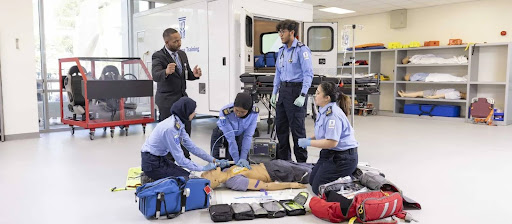
The University of Doha for Science and Technology’s School of Health Sciences stands as the Persian Gulf region’s premier institution for applied, industry-aligned health education delivering hands-on preparation designed explicitly for employability across Qatar and the Gulf, systematically preparing graduates for immediate professional contribution to rapidly expanding regional healthcare systems. UDST leads with comprehensive degrees in nursing, respiratory therapy, health informatics, medical radiography, public health, and allied health sciences that include extensive simulation laboratories equipped with high-fidelity medical mannequins and current technologies, substantial clinical placements in major healthcare facilities providing genuine patient care experience under professional supervision, and strong national health partnerships with employers actively shaping curriculum ensuring graduates possess competencies healthcare systems urgently need.
Programs feature state-of-the-art simulation labs where students practice clinical procedures and patient care scenarios in safe controlled environments before encountering actual patients, carefully structured clinical placements in Hamad Medical Corporation hospitals, Primary Health Care centers, Sidra Medicine, and specialized clinics where students provide real patient care developing both technical skills and professional judgment, and systematic national health partnerships connecting education directly to employment through formal advisory boards comprising hospital administrators, nursing directors, and healthcare executives. What fundamentally distinguishes UDST’s health sciences programs throughout the entire Persian Gulf is their systematic alignment with Qatar National Health Strategy workforce priorities and direct healthcare employer input ensuring every aspect of curriculum design, clinical training sequences, competency assessments, and learning outcomes produces graduates with precisely the capabilities regional healthcare systems actively seek.
The applied, industry-aligned health degrees with regional workforce outcomes focus emphasizes practical clinical competency and workplace readiness rather than purely theoretical academic content. Students develop genuine practical proficiency with contemporary medical technologies, electronic health record systems, patient monitoring equipment, diagnostic imaging technologies, respiratory therapy devices, and clinical procedures actually used daily in Gulf healthcare facilities. Faculty balance advanced academic qualifications with substantial clinical experience in regional healthcare settings, teaching students how to apply knowledge solving actual patient care challenges in Gulf healthcare contexts shaped by diverse multicultural patient populations, regional disease patterns, cultural considerations, and healthcare delivery models.
2. College of the North Atlantic-Qatar (CNA-Q) – Top Technical Health Training in the Gulf
College of the North Atlantic-Qatar operates as the Gulf region’s leading polytechnic institution for technical health professions education, offering career-focused in-demand diploma programs across pharmacy technician, radiography, diagnostic imaging, dental hygiene, biomedical equipment technology, and cardiopulmonary sciences with curriculum explicitly crafted in systematic consultation with healthcare employers across the GCC ensuring graduates are genuinely job-ready for immediate workforce entry. Following a proven polytechnic educational model emphasizing practical skill development and technical competency over purely theoretical academic instruction, CNA-Qatar designs programs around actual job requirements in healthcare facilities, pharmacies, dental clinics, and diagnostic centers where graduates will work immediately throughout the Gulf region upon program completion. The career-focused technical health training with Gulf employer relevance produces graduates possessing specialized technical skills and professional certifications regional healthcare systems urgently need to address critical workforce shortages.
Students engage extensively with current medical equipment, healthcare technologies, and clinical procedures through comprehensive laboratory training accurately replicating professional healthcare environments, substantial clinical practicums providing supervised hands-on experience in actual regional healthcare facilities, and rigorous competency-based assessments measuring actual clinical skills and technical proficiencies rather than just theoretical knowledge. Strong systematic collaboration with Gulf healthcare employers including major hospitals, primary care facilities, private clinics, pharmacies, and specialized medical centers across Qatar, UAE, Saudi Arabia, and neighboring countries ensures programs remain continuously aligned with actual regional workforce needs, current clinical practices, emerging technologies, and evolving healthcare delivery models throughout GCC countries.
The polytechnic approach with strong emphasis on rapid job readiness and Gulf employer relevance produces graduates who enter healthcare workforces confident and immediately capable, possessing practical clinical skills and technical competencies healthcare employers throughout the region value and can deploy without extensive additional on-the-job training.
3. King Saud University – Top for Breadth of Health Disciplines
King Saud University’s College of Applied Medical Sciences in Riyadh operates as the Gulf region’s most comprehensive health education institution offering over a dozen distinct programs in allied health sciences—including physical therapy, speech-language pathology, clinical laboratory science, respiratory therapy, emergency medical services, radiological sciences, clinical nutrition, and multiple other disciplines—representing the region’s widest range of allied health disciplines available within a single institution. This breadth enables students to choose from extensive specialized health professions while benefiting from shared resources, interprofessional education opportunities, and comprehensive clinical training networks.
Programs systematically combine rigorous academic preparation with extensive practical clinical training through teaching hospitals and faculty-led research projects supporting deep clinical experience, evidence-based practice, and contributions to advancing medical knowledge. Students engage in clinical rotations across Saudi Arabia’s major hospitals, specialized medical centers, and primary care facilities while also participating in research projects investigating regional health challenges, treatment effectiveness, healthcare delivery innovations, and biomedical science. Faculty maintain both academic expertise and active clinical practice, teaching current evidence-based approaches while contributing to healthcare improvement through scholarship and research. Strong partnerships with Saudi Arabia’s Ministry of Health, major hospital systems throughout the Kingdom, specialized medical centers, and research institutions provide students comprehensive clinical training opportunities spanning diverse healthcare settings and patient populations. The comprehensive scope covering multiple allied health disciplines under one institution creates valuable opportunities for interprofessional education where students from different health professions learn collaboratively, preparing them for effective teamwork in modern healthcare environments requiring coordination across disciplines. For students seeking comprehensive allied health education at a major research university with the Gulf’s widest program selection and extensive clinical partnerships throughout the region’s largest healthcare system, King Saud University provides distinguished programs combining clinical excellence with research capabilities.
4. United Arab Emirates University – Top Research-Linked Health College
United Arab Emirates University’s College of Health Sciences delivers comprehensive academic and professional degrees in public health, physiotherapy, health services management, and related health sciences that deliberately stand out for integrating field placements in actual healthcare and community settings with Gulf-focused health research addressing specific regional health challenges and population health priorities. Located in Al Ain, UAEU operates as the UAE’s flagship national university bringing decades of health education experience while maintaining modern approaches to healthcare training and health research. Programs systematically blend rigorous academic preparation with practical clinical application, preparing graduates for diverse roles across healthcare delivery, public health agencies, healthcare administration, and health research institutions throughout the Gulf.
The strong blend of research and real-world practice distinguishes UAEU from purely clinical training programs, developing both practical competencies and research capabilities enabling graduates to contribute to advancing healthcare delivery and population health through evidence-based innovations. Students learn to critically evaluate health literature, conduct health research using appropriate methodologies, analyze complex health data, apply research findings to improve healthcare delivery and population health outcomes, and communicate research effectively to policymakers and stakeholders. Faculty maintain active research programs investigating regional health challenges including chronic disease prevention, maternal and child health, healthcare quality improvement, health systems strengthening, and occupational health and safety, bringing current research insights directly into classroom instruction.
Strong partnerships with UAE health authorities, hospitals, community health organizations, and public health agencies provide students valuable field placement experiences and research opportunities addressing actual regional health challenges. For students interested in health sciences education that integrates academic research with clinical application, public health careers addressing population health, healthcare management roles, or physiotherapy practice throughout the Gulf, UAEU provides distinguished programs at the UAE’s premier national university with strong research capabilities.
5. Sultan Qaboos University – Top Community-Focused Nursing School
Sultan Qaboos University’s College of Nursing and Health Sciences operates as the Gulf region’s premier institution for community-focused nursing education, deliberately emphasizing culturally competent care appropriate for diverse Gulf populations and systematic community engagement addressing population health beyond individual patients through degrees in nursing and health education supporting Oman’s national healthcare priorities while attracting students from across the Gulf. As the top public-sector nursing education provider in the Gulf, SQU combines rigorous academic preparation meeting international nursing standards with thoughtful adaptation to regional cultural contexts, developing both clinical competencies and cultural awareness essential for effective nursing practice across the region’s multicultural environments serving diverse patient populations.
Programs systematically integrate evidence-based nursing practice ensuring clinical decisions rest on current research, patient-centered care approaches respecting individual preferences and cultural values particularly important in Gulf contexts, community health perspectives addressing population health challenges through primary care and health promotion, and leadership capabilities preparing graduates for advancement into nursing management and healthcare administration. The curriculum comprehensively covers clinical nursing competencies across medical-surgical, maternal-child, mental health, community health, and specialized areas through theoretical coursework and extensive clinical placements in Oman’s hospitals, primary health centers, and community settings. Faculty combine nursing expertise with deep understanding of Gulf healthcare contexts and cultural considerations, teaching students how to provide culturally-sensitive care appropriate for the region’s diverse populations including nationals and expatriates from numerous countries.
Strong partnerships with Oman’s Ministry of Health, regional hospitals, community health programs, and primary care facilities provide students comprehensive clinical training across diverse settings serving various populations. For students seeking nursing education grounded in both international standards and regional cultural contexts, preparation for community health roles addressing population health challenges, or nursing leadership development for Gulf healthcare systems, Sultan Qaboos University provides distinguished comprehensive programs with strong community focus.
6. Bahrain Polytechnic – Top for Health and Wellness Careers
Bahrain Polytechnic’s School of Health and Sport Sciences offers innovative applied programs in health promotion, sports science, and applied health technology combining health sciences with emerging wellness domains, with an employability-first model making it ideal for students pursuing careers in wellness promotion, disease prevention, tech-driven healthcare, and health-focused sports science rather than traditional clinical treatment roles. The institution’s health offerings deliberately include emerging areas increasingly important as Gulf countries address rising chronic disease rates and emphasize preventive health strategies including sports science studying human performance and injury prevention, health promotion designing interventions to improve population health behaviors and reduce disease risk, and wellness programs addressing lifestyle factors affecting health including nutrition, physical activity, stress management, and health behaviors. Following an applied educational philosophy emphasizing practical skills and direct workforce readiness, programs prepare graduates for diverse roles in corporate wellness programs, health promotion agencies, sports medicine clinics, fitness and wellness centers, occupational health services implementing workplace health initiatives, and governmental health promotion programs implementing preventive health strategies aligned with national health priorities.
Bahrain’s best option for applied health and wellness degrees provides students hands-on experience with fitness assessment technologies, health promotion program design methodologies, wellness counseling approaches, community health intervention strategies, and preventive health tools. Strong systematic collaboration with Bahraini health employers, wellness organizations, corporate wellness programs, sports facilities, and health promotion agencies ensures curriculum remains aligned with actual employment needs in these emerging health sectors. For students interested in health promotion and preventive care rather than traditional clinical treatment, careers in wellness and sports science addressing lifestyle and chronic disease prevention, or emerging health sectors focused on prevention throughout the Gulf, Bahrain Polytechnic provides innovative applied programs preparing graduates for these evolving healthcare domains.
Choosing Your Health Education Path
Selecting the right health college across the Persian Gulf requires systematic assessment of your specific health profession interests, career goals, geographic preferences, and whether you prioritize applied clinical training, research capabilities, or emerging wellness sectors. Students planning careers in direct patient care should focus on programs emphasizing clinical skills like UDST or CNA-Q. Those seeking comprehensive allied health education at major research universities investigate King Saud University or UAEU. Students wanting nursing education with strong community health focus explore Sultan Qaboos University. Those interested in emerging wellness and prevention sectors consider Bahrain Polytechnic.
Clinical training quality and healthcare facility partnerships matter tremendously. Investigate which hospitals and healthcare systems each program partners with for clinical placements, as experience in major regional healthcare institutions provides superior training and networking.
Accreditation and professional licensing requirements deserve careful attention, as regulations vary across Gulf countries. Verify your chosen program meets requirements for professional practice in your intended country.
Ready to pursue health education in the Persian Gulf? Identify which specific health profession aligns with your interests, research clinical training opportunities and healthcare partnerships, understand licensing requirements in your intended country of practice, assess whether programs emphasize applied clinical skills or research capabilities, and connect with current students or graduates who can share candid perspectives about program quality and career preparation effectiveness across the Gulf region.

Most people don’t talk about the middle part of IELTS preparation.
The start is clear. You enrol. You organise your schedule. You feel motivated.
The end is clear too. A score. A result. Relief, or at least closure.
The middle is messier.
That’s where IELTS Classes in Brisbane tend to do their quietest, and most important, work. Not the dramatic breakthroughs. Not the marketing promises. Just the steady reshaping of how students think about the test and, sometimes, about their own English.
Early Improvement Is Loud. Real Improvement Isn’t.
At the beginning, progress feels obvious.
You learn the test format. You understand question types. You stop making basic mistakes. Scores move quickly, at least a little.
Then it slows down.
Suddenly you’re working harder, but results aren’t changing much. That’s usually when people start questioning whether classes are actually helping.
The truth is, this slower phase is often where IELTS Classes in Brisbane start to matter more, not less. The easy gains are gone. What’s left is precision.
Classes Don’t Add Effort. They Redirect It.
Many students are already working hard before they join a class.
They’re watching videos. Practising tests. Writing essays late at night. Repeating speaking answers to themselves.
The issue usually isn’t effort. It’s direction.
Good IELTS Classes in Brisbane don’t pile on extra work for the sake of it. They narrow the focus. They help students see which habits are helping and which ones are quietly holding scores back.
That clarity alone saves a lot of wasted time.
Writing Improves When It’s Slowed Down, Not Rushed
Writing is where frustration builds fastest.
Students write more and more essays, hoping volume will fix the problem. Often it doesn’t. The same feedback comes back. Task response. Coherence. Clarity.
In well-run IELTS Classes in Brisbane, writing tends to slow down. One paragraph at a time. Sometimes one sentence at a time. Not glamorous, but effective.
It’s uncomfortable at first. People want to move faster. But slowing down is often what finally moves the score.
Speaking Classes Do More Than Practise Answers
Speaking practice isn’t just about talking more.
Many students speak English daily and still underperform in the IELTS interview. The issue isn’t fluency. It’s structure. Development. Managing pressure.
Through guided practice, IELTS Classes in Brisbane help students understand how to build answers without sounding memorised. How to pause without freezing. How to recover when a thought doesn’t land properly.
Those skills don’t show up instantly. They settle in over time.
Listening And Reading Improve Through Strategy, Not Repetition
When listening or reading scores stall, students often blame vocabulary.
More often, the problem is tactical. Timing. Overthinking. Losing focus halfway through a section.
This is where IELTS Classes in Brisbane shift the conversation. These skills aren’t just about understanding English. They’re about decision-making under pressure.
Small adjustments here can unlock bands that practice alone never touched.
Classes Quietly Reduce Anxiety
This part doesn’t always get named, but it matters.
Preparing for IELTS can be stressful, especially when migration, study, or work depends on the score. Anxiety shows up in rushed answers, second-guessing, or blank moments.
Over time, IELTS Classes in Brisbane normalise the test environment. Students practise under exam-like conditions. They learn what a “safe” answer looks like.
Familiarity doesn’t remove nerves completely. It makes them manageable.
Brisbane Life Shapes How People Study
Studying in Brisbane often happens around real life.
Work shifts. Commutes. Family responsibilities. Heat. Fatigue. Not ideal study conditions.
The IELTS Classes in Brisbane that work best tend to acknowledge this. Study plans stay flexible. Expectations stay realistic. Progress feels sustainable instead of exhausting.
Perfect routines rarely last. Practical ones do.
Progress Often Feels Boring Before It Feels Rewarding
This surprises people.
There’s usually no big moment where everything clicks. Instead, feedback starts making sense. Mistakes repeat less often. Answers feel calmer.
Then a score changes.
That’s often how IELTS Classes in Brisbane deliver results. Quiet adjustments. Gradual confidence. No hype.
Why People Quit Right Before Things Improve
This is the hard truth.
Many students stop classes during the plateau. Right before things start to shift. The slow phase feels discouraging, especially without visible results.
What they don’t always realise is that this phase usually means the foundation is already there. What’s missing is refinement.
That refinement is exactly what IELTS Classes in Brisbane are designed to support, even when it feels subtle.
The Value Shows Up Later Than Expected
Looking back, many students say the same thing.
They didn’t realise how much they were learning until after the test. Until they noticed how they structured answers. How they managed time. How they stayed calm under pressure.
That’s the long-term value of IELTS Classes in Brisbane from English Wise when they’re done properly. Not just a score, but a steadier relationship with English.
And that steadiness often lasts longer than the exam itself.
SQL remains the backbone of data-driven decision-making in 2026. Over 90% of enterprise data still resides in relational databases, and SQL continues to be one of the most in-demand technical skills across data analytics, business intelligence, software development, and AI workflows.
Whether you’re an aspiring data analyst, software developer, business professional, or career switcher, learning SQL online with a certificate can significantly strengthen your job readiness.
How We Selected These SQL Courses
- Offered by recognized universities or established EdTech platforms
- Strong focus on practical, job-ready SQL skills
- Suitable for beginners as well as working professionals
- Hands-on projects and real database exposure
- Certificate of completion for career credibility
Overview: Best SQL Courses Online with Certificates (2026)
| # | Program | Provider | Primary Focus | Delivery | Ideal For |
| 1 | SQL programming | Great Learning | Job-ready SQL skills | Online | Beginners & Analysts |
| 2 | SQL Bootcamp | Udemy | Comprehensive SQL mastery | Online | Working professionals |
| 3 | SQL for Data Science | Coursera | SQL for analytics | Online | Data beginners |
| 4 | Databases and SQL for Data Science | IBM | SQL + databases | Online | Career switchers |
| 5 | Oracle SQL | Great Learning | Oracle database fundamentals | Online | Students & Freshers |
| 6 | Introduction to Databases | Stanford Online | Academic SQL foundation | Online | Serious learners |
| 7 | SQL Certification Course | Simplilearn | SQL + projects | Online | Data professionals |
| 8 | SQL for Business Analytics | UpGrad | SQL for decision-making | Online | Business analysts |
In-Depth Course Reviews
1. Learn SQL Programming — Great Learning
This hands-on SQL program is designed to help learners build real-world database skills from scratch. It focuses on writing queries, managing datasets, and solving practical business problems using SQL.
Delivery & Duration: Online, short-term
Credentials: Certificate of completion
Instructional Quality & Design: Practice-oriented learning with exercises and case-based datasets
Support: Structured modules with guided practice
Key Outcomes / Strengths
- Master SELECT, JOIN, GROUP BY, subqueries, and indexing
- Work with real datasets used in business analytics
- Build SQL confidence for job interviews
- Ideal foundation for data analyst roles
2. The Complete SQL Bootcamp — Udemy
A comprehensive SQL bootcamp covering beginner to advanced topics including joins, constraints, indexing, and database optimization.
Delivery & Duration: Online, self-paced
Credentials: Udemy certificate
Instructional Quality & Design: Step-by-step video tutorials with exercises
Support: Instructor Q&A forum
Key Outcomes / Strengths
- Build SQL from fundamentals to advanced querying
- Practice using PostgreSQL
Prepare for SQL-based technical interviews
3. SQL for Data Science — Coursera
This beginner-friendly course focuses on SQL specifically for data science applications, including data manipulation and querying large datasets.
Delivery & Duration: Online, ~4 weeks
Credentials: Certificate via Coursera
Instructional Quality & Design: Application-focused SQL for analytics
Support: Peer discussion forums and graded assessments
Key Outcomes / Strengths
- Query structured datasets
- Filter, aggregate, and manipulate data
- Use SQL for data analysis workflows
4. Databases and SQL for Data Science — IBM
Part of IBM’s data science pathway, this course introduces SQL alongside database fundamentals and cloud-based querying.
Delivery & Duration: Online
Credentials: IBM certificate
Instructional Quality & Design: Industry-aligned curriculum with practical labs
Support: Hands-on labs via cloud platforms
Key Outcomes / Strengths
- Understand relational database models
- Write complex SQL queries
- Use SQL within data science pipelines
5. SQL Certification Course Free — Great Learning (Free Course)
This free Oracle SQL course introduces learners to relational databases using Oracle environments. It is well-suited for students and fresh graduates entering IT or database administration roles.
Delivery & Duration: Online, self-paced
Credentials: Free certificate
Instructional Quality & Design: Concept-first introduction with structured practice
Support: Self-paced learning
Key Outcomes / Strengths
- Understand Oracle database architecture
- Write SQL queries in Oracle environments
- Learn DDL and DML commands
Strong starting point for database careers
6. Introduction to Databases — Stanford Online
An academically rigorous introduction to relational databases and SQL from Stanford faculty.
Delivery & Duration: Online
Credentials: Certificate (paid track)
Instructional Quality & Design: Theory-backed SQL instruction with structured assignments
Support: University-developed coursework
Key Outcomes / Strengths
- Understand database schema design
- Learn normalization and relational algebra
- Build strong theoretical SQL foundations
7. SQL Certification Course — Simplilearn
This program combines SQL fundamentals with applied projects designed for professionals working in analytics and IT roles.
Delivery & Duration: Online
Credentials: Industry-recognized certificate
Instructional Quality & Design: Project-based structure
Support: Instructor-led sessions (in selected tracks)
Key Outcomes / Strengths
- Execute complex queries
- Work with enterprise datasets
- Gain career-ready SQL skills
8. SQL for Business Analytics — upGrad
This course focuses on using SQL for business intelligence, reporting, and decision-making.
Delivery & Duration: Online
Credentials: Certificate
Instructional Quality & Design: Business-focused SQL learning
Support: Structured learning path
Key Outcomes / Strengths
- Extract insights from business databases
- Use SQL for reporting and dashboards
- Strengthen analytics-driven decision-making
Final Thoughts
SQL continues to be a foundational skill across data analytics, software development, fintech, healthcare analytics, and AI systems.
The best SQL course for you depends on your goal:
- Beginners: Start with Practical SQL Training or Oracle SQL (free).
- Career switchers: IBM or Coursera programs provide structured foundations.
- Professionals: Bootcamps or certification programs offer deeper mastery.
In 2026, SQL isn’t just a technical skill; it’s a career multiplier. Choosing the right certified course can accelerate your entry into high-demand data and technology roles.
-
 Entertainment12 months ago
OGFap Review: Pros, Cons, and User Experience
-
 Fashion11 months ago
Comme des Garcons: The Iconic Avant-Garde Fashion Brand
-
 Blog12 months ago
i̇ns: Exploring Its Meaning, Values, and Modern Impact
-
 Blog12 months ago
鲁Q 669FD License Plate Lookup – Car History & Vehicle Records
-
 Life Style11 months ago
The Ultimate Guide to Halloween Contacts for Eyes: Everything You Need to Transform into Your Darkest Character
-
 Education7 months ago
Learn SQL Online: 8 Best Courses with Certificates in 2026
-
 Fashion10 months ago
Custom Jersey Printing: Designing Your Team’s Identity with SeamJersey
-
 Uncategorized12 months ago
Manga18fz: A Complete Guide to the Trending Manga Platform